
What to look for in a local solar installer
What to look for in a local solar installer
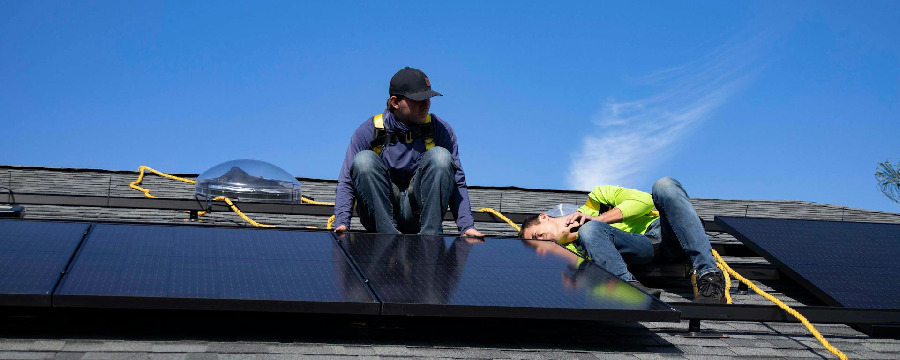
SolarTown designs and sells pre-sized solar kits, which ship out on a pallet directly to consumers. While a large part of our customer base opts for a full DIY installation, that approach isn’t right for everyone: some folks are busy, or just prefer to leave the work to someone with more technical knowledge.
The most common question we get from the latter group is: “how can I find a good local solar installer?”
This article will highlight the platforms that are available to help you connect with local installers. We will also provide a checklist of things to look out for, to make sure your installer is competent, accredited, and bidding at a fair price.
The signs of a good solar installer
Here’s a quick checklist of qualities to look for in a good solar installer.
License
At minimum, your contractor should hold a C-10 license (the standard license for a general electrical contractor).
NABCEP Accreditation
A NABCEP certification is nice to have, but not mandatory. NABCEP is the North American Board of Certified Energy Practitioners. It is a third-party organization that offers training and accreditation in the solar industry.
While a NABCEP distinction shows specific interest in the solar industry, more important is the installer’s field experience gained from installing real systems. It has become increasingly common for roofers, electricians, and general contractors to offer solar installation in their suite of services.
There is absolutely nothing wrong with hiring an experienced member of this group, even if they are not NABCEP-certified.
Cost
The main purpose of sourcing your own equipment and hiring a local solar installer is to save money on the labor costs. Local solar installers should bill at a rate that leaves some of those savings in your pocket.
If the cost of equipment + local labor doesn’t beat the cost of a full-service install, there’s no point in doing the extra legwork!
A 2024 study estimates the cost of a full-service solar installation at $2.68 per watt. The estimated equipment costs are $1.22 per watt. That means a full-service installer is charging $1.46 per watt for overhead, which pays for office rentals, payroll, marketing, and other expenses.
Related article: DIY Solar vs. Full-Service Cost Breakdown
Local installers have much lower expenses, and as a result, their bid for installation should be more competitive: around 50-75% of the price of a national installer.
That translates to a bid of 70 cents to $1.10 per watt from a local solar installer - or approximately $3,500 - $5,500 for a 5 kW system.
If you receive a bid that is significantly higher than this range, we would encourage you to shop around for multiple quotes and negotiate for a better deal.
Time to install
Residential grid-tied systems should take no more than a few days of labor to install, especially with a trained team of 2-4 laborers. If an installer quotes a timeframe that is spread out over more than a week or so, it should raise some concerns about their efficiency.
Make sure your installer has availability on their schedule and shows willingness to meet project deadlines. Other steps in the process, like interconnection and inspection, depend on completing the installation on time. If delays cause you to miss your inspection date, it can take a long time to re-book the appointment.
Why Buy Direct? DIY vs. “Buy & Hire” vs. Turnkey Installation Costs
Sourcing your own equipment can help keep project costs under control.
Full DIY installations are the most cost-effective option, but buying a kit and hiring local help can also save a good amount of money compared to a full-service installation. National installers tend to have higher costs to cover overhead, including national offices, larger marketing budgets, and other tangential costs.
Based on a 2024 NREL study on the cost of solar installations, we can break down the distribution as follows:
- components: $1.22/watt
- local install labor: $0.70 to $1.10/watt
- full service: $2.68/watt ($1.22 in component costs, $1.46 in installer costs)
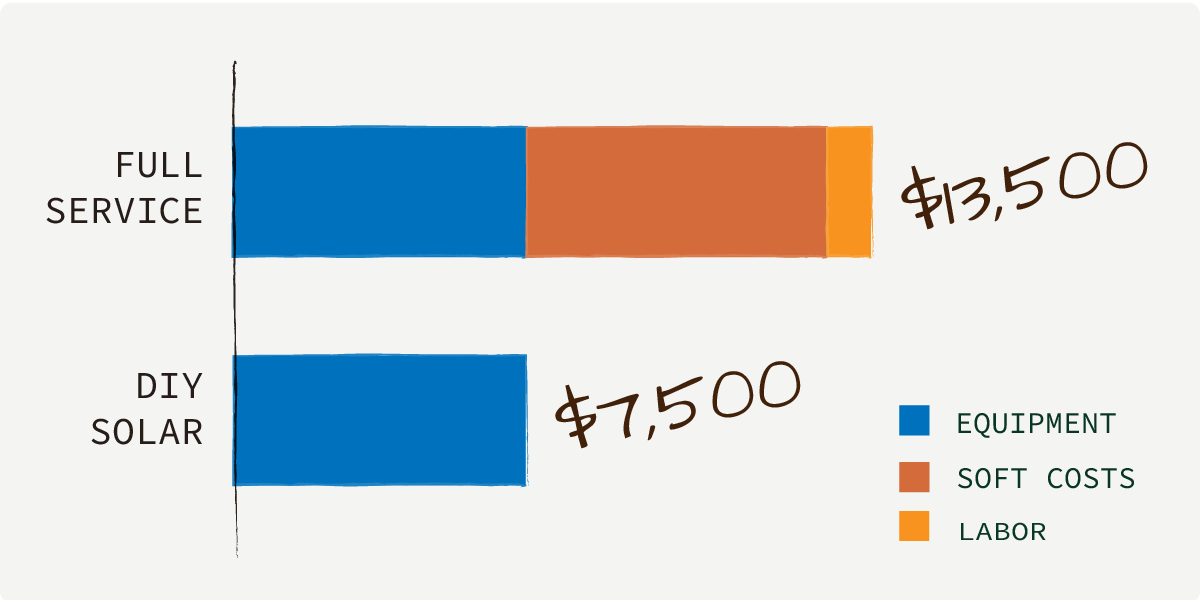
For a deeper dive into the numbers, take a look at our article comparing the costs of DIY vs. full-service solar installations.
Where to look for local solar installers
Here are a few ways to track down a reputable local solar installer:
- Referrals from friends / family
- Referrals from us / the community
- Review sites
Referrals from friends / family members
Ask your inner circle if they can recommend anyone who does local contracting. It doesn’t necessarily have to be a dedicated solar installer. As solar adoption has grown, it’s become more common to find roofers, electricians, and builders who count solar among their core competencies.
We recommend turning to friends and family first, simply because it’s easier to be confident with the recommendation of someone you already know you trust.
Referrals from us / the community
If you don’t turn up any good names after asking around, feel free to reach out to us for a recommendation. We may be able to connect you with an installer from our internal network, especially if you live in California (where our headquarters are located).
You can also post in local community discussion forums asking if anyone has had good experiences with a local installer. These discussions tend to be more honest and (mostly) free from self-promotion or deceptive advertising practices, like falsified reviews. Some good options:
- Nextdoor
- Facebook groups
- Local subreddits on Reddit (for example r/LosAngeles)
Review sites
If you are not able to track down a referral, it’s time to turn to public review sites for some research. Here are a few options:
- Google reviews (search for “solar installer near me”)
- Angie’s List (tailored toward contractors and home improvement projects)
- Yelp (less populated than Google reviews)
Review sites can be a good resource to help you find a local solar installer, but we find these resources to be somewhat less trustworthy for a number of reasons:
- Reviews can be faked by bots, or cheap labor hired through sites like Fiverr.
- Reviews can be illegally incentivized (“rate us 5 stars and get a $20 gift card!”)
- Companies can change ownership and coast off the reputation of the previous owners.
It goes the other way, too: frustrated customers will leave 1-star reviews because something went wrong with their project, even if it wasn’t an installer’s fault. For example, a long permitting delay is between the customer and the permitting office, but there’s nothing stopping that customer from leaving a poor Google review and unfairly tanking the installer’s reputation.
Our advice is simple: don’t just look at the star ratings. Comb through the reviews with a critical eye and use your best judgment about the claims made - both positive and negative. And once you start shopping around for quotes, double-check that they exhibit the “signs of a good solar installer” outlined in the section above.
Questions About Your Solar Project?
Every property is different: roof angle, shading patterns, local climate, utility rate structure, and energy usage all play a major factor in solar system design. Looking for guidance? Our technicians can help you dial in the right equipment for your setup and answer any questions about your project.

Get Help With Your Solar Project
Talk through system sizing, equipment options, and project specifics with our solar technicians.
Start Planning