
The Pros and Cons of Solar Power
The Pros and Cons of Solar Power
Quick Summary
- Solar cuts electricity bills by $18k-$28k over 25+ years for the average American home
- Up-front costs are high: $5k-$30k+ depending on DIY vs. professional install
- Local solar incentives may reduce costs, but vary broadly based on location
- Maintenance is minimal, but some components may need replacement after 10-15 years
- Location matters: production varies by 40-60% between ideal and poor solar conditions
Introduction
This article covers the pros and cons of solar power for residential applications. The majority of the content focuses on grid-tied solar systems, which allow homes and businesses to offset their electric bills while remaining connected to utility power.
We'll also address off-grid solar systems in a dedicated section at the end. Off-grid solar serves a different purpose - delivering power to remote properties without utility connections - and comes with its own unique set of advantages and challenges.
Advantages of Solar Power
Long-Term Electric Bill Savings
The primary appeal of solar is straightforward: it reduces your electric bill. For the average American household using 10,000 kWh per year, that translates to $18k-$28k in savings over a 25-year period, depending on local electricity rates and whether you hire an installer or go DIY.
Those savings compound as electricity rates increase over time. If you're paying $0.15/kWh today, historical trends suggest that number could climb to $0.20-$0.25/kWh within a decade.
25-Year Energy Savings with Solar (vs. Grid Power)
Based on US national average energy cost and household energy consumption rates
Increases Property Values
Recent data suggests solar adds 5-6% to home resale value on average. For a $400k home, that's $20k-$24k. The premium is higher for newer systems (7-10%) and lower for older installations, but owned systems consistently outperform comparable non-solar homes on the market.
The counterpoint: this matters more if you sell before the projected lifespan of the system (25 years) has run its course. If you stay in your home for 25+ years, the resale premium is just a bonus on top of the energy savings you've already collected.
Federal and Local Incentives
With the deadline fast approaching, there’s not much time left to claim the 30% federal solar tax credit. However, state governments and local municipalities also offer incentives for going solar, in the form of tax credits, rebates, reduced utility rates, and various other programs.
Some states are more solar-friendly than others. Check out our breakdown of solar friendly states, and browse DSIRE USA (Database of State Incentives for Renewables and Efficiency) for specific programs available in your area.
Energy Independence & Flexibility
Solar power systems reduce your reliance on utility power. Hybrid kits connect to the grid like normal, but they also provide local battery backup in case of outages. In situations with harsh climates, unreliable grid infrastructure, or essential equipment that can’t afford interruption (like key infrastructure or medical devices), solar is flexible enough to provide a failsafe when the grid goes down.
Although hybrid kits are a bit more expensive, they still work out favorably in terms of electric bill savings, and they are flexible enough to provide peace of mind to those who need an additional layer of protection.
Reliable and Low Maintenance
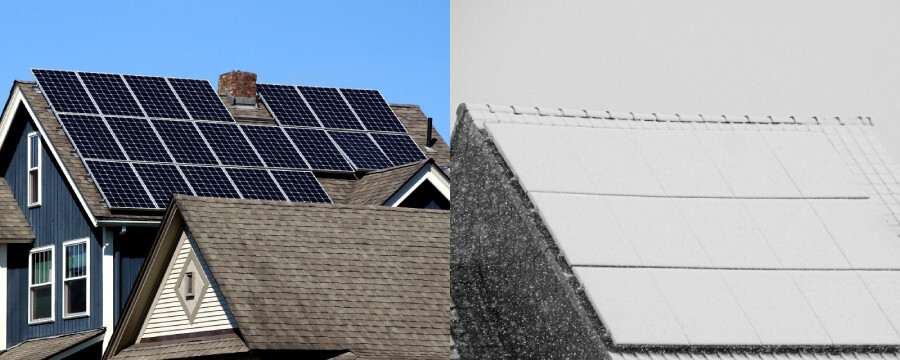
Solar panels require minimal upkeep. Clear off debris a few times per year, brush snow in winter if necessary. No moving parts means fewer failure points.
In addition, solar panels are now a mature and proven technology. A recent study shows 80-90% of systems perform within 10% of expectations or better after 25+ years. Panel failures are rare (under 0.2%), and most systems operate maintenance-free for decades.
Drawbacks of Solar Power
High Up-Front Costs
Solar requires significant capital investment. A typical residential system costs up to $15k for DIY installations, or up to $35k for full-service professional installs. (These are generic estimates, not meant to represent all projects.)
That's a barrier for many homeowners. While the long-term ROI is solid, not everyone has that kind of cash available, or the desire to finance a system.
Payback Period
Most residential systems take 7-12 years to break even, depending on local electricity rates and installation costs. If you move before that window closes, you're relying on the home value premium to recover your investment - which may or may not cover the full cost depending on system age and local market conditions.
Hidden Costs
Solar panels last 25-30+ years, but other components don't. String inverters typically need replacement after 10-15 years. If you add battery storage, you’ll budget for replacement every 10-20 years depending on battery chemistry.
There is also the potential to incur costs before your solar project ever gets started. Solar needs to be built on a sturdy foundation, so you may get roped into a roof replacement if it isn’t up to structural codes. The other major barrier is your electrical panel - if it doesn’t have enough capacity for solar, or otherwise doesn’t meet safety standards, it will need to be replaced.
Each of these issues can add several thousand dollars in project costs. These costs eat into your long-term savings projections, and will need to be factored into your total cost of ownership.
Location-Dependent Performance
Your location strongly influences the amount of sunlight that hits your solar panels on a daily basis. Arizona averages 5-7 peak sun hours daily. Seattle gets 3-4. That's a 40-60% difference in production potential, which directly impacts your system's ROI.
Tree coverage, roof orientation, and local weather patterns also affect output. A South-facing roof in California performs drastically better than an East-facing roof in Michigan. You can compensate with a larger system, but that increases costs. (It’s worth pointing out that solar is almost universally cheaper than buying electricity from the utility in the long run, regardless of location).
Permitting and HOA Restrictions
Permitting requirements vary by jurisdiction. Some areas have streamlined solar approval processes. Others require extensive documentation and inspection. Budget time for this - it can add weeks or months to your project timeline.
HOAs may restrict panel placement or require aesthetic approval. Some states have "solar access rights" that limit HOA authority, but enforcement varies. Check local regulations before committing to a system design.
The Bottom Line: Is Grid-Tied Solar Worth It?
Solar makes financial sense for homeowners who:
- Plan to stay in their home for 10+ years
- Have adequate roof space or property for ground mounts
- Live in areas with decent sun exposure (3.5+ peak sun hours daily)
- Have the capital to invest up front or access to favorable financing
- Can take advantage of available solar incentives
Solar is less compelling for:
- Short-term homeowners (and renters, who are excluded from solar entirely)
- Homes which need a rooftop and/or electrical panel replacement
- Properties with significant shade coverage
- Areas with very low electricity rates (under $0.10/kWh)
The technology works. The question is whether the economics work for your specific situation.
Off-Grid Solar: A Different Application
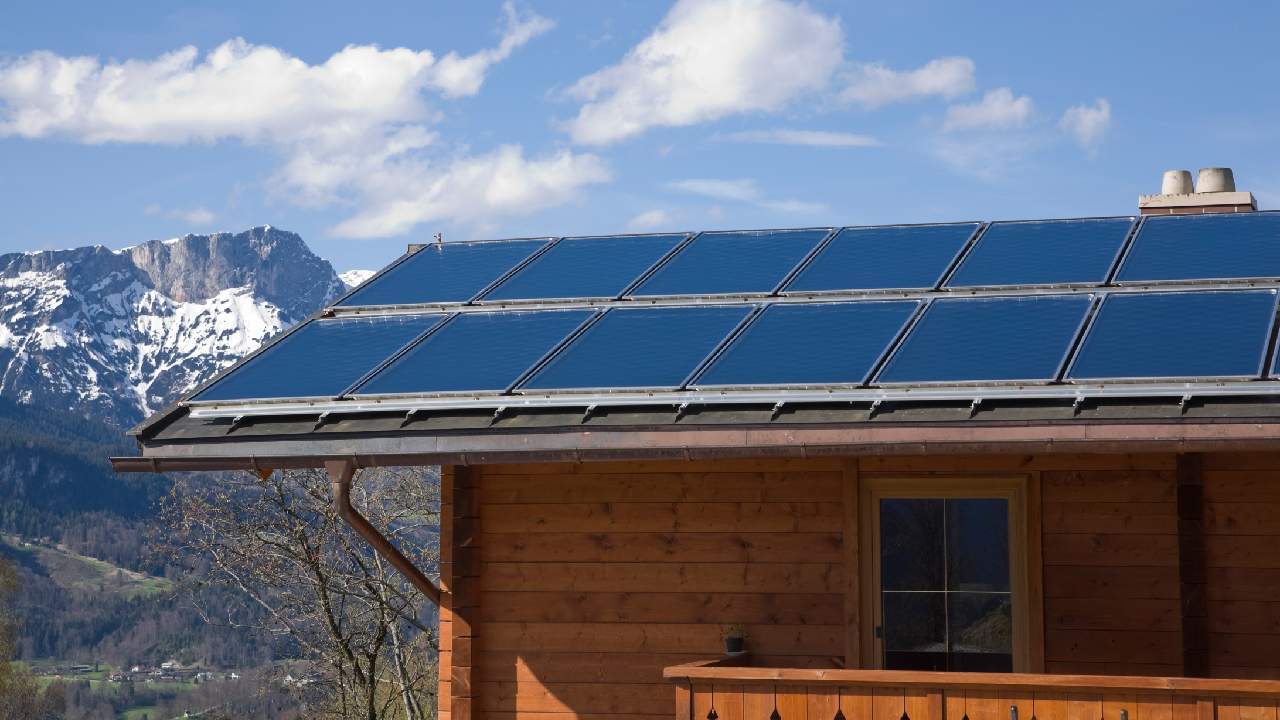
Off-grid solar serves an entirely different purpose than grid-tied systems. Rather than directly offsetting utility bills, off-grid systems provide power to remote properties that lack utility connections - cabins, rural homesteads, RVs, boats, and other locations where running power lines isn't practical or economical.
Pros of Off-Grid Solar
True Energy Independence
Off-grid systems deliver complete independence from utility infrastructure. There's no monthly electric bill, no dependence on grid reliability, and no exposure to rate increases. Your power generation and storage capacity determines what you can run.
Most Cost-Effective Remote Power Option
For properties without existing utility connections, off-grid solar is typically the most economical power solution available. The alternatives include:
- Running new power lines to the property: $15k-$50k+ depending on distance
- Generators: A great option for emergency backup, but too noisy and expensive to run continuously as a primary power source
- Hydropower: Requires suitable water sources with adequate flow and elevation drop (rare)
- Wind power: Inconsistent output, requires proper wind conditions, higher maintenance
Even with battery costs factored in, solar comes out ahead for the majority of remote power applications. The key is to size solar as your primary power source, with backup generators reserved for extended storms or periods without sun.
Viable for a Wide Variety of Applications
Off-grid solar works for properties where other options simply aren't practical. This can mean cabins or remote homesteads miles from the nearest power line, but it also applies to separate structures on grid-tied properties, where running power would be cost prohibitive. Barns, detached garages, workshops and sheds are all great candidates for small off-grid solar kits.
The Cons of Off-Grid Solar
High Battery Costs
Batteries are mandatory for off-grid systems, and they're expensive. A lithium battery bank with 10-20 kWh of storage can run $5k-$15k, with replacement needed every 10-20 years depending on battery chemistry and usage patterns.
Battery costs dominate off-grid system budgets in a way that doesn't apply to grid-tied installations. This forces a tradeoff: you either pay for extensive battery capacity or design your lifestyle around energy conservation.
Batteries are still a cheaper alternative than other remote power delivery options, like wind, hydro, gas generators, or running dedicated power lines. In addition, lithium batteries have dramatically fallen in costs over the past 10 years, making battery storage much more appealing than it once was.
Requires Energy-Efficient Lifestyle
Off-grid living means managing your energy consumption carefully. High-draw appliances like electric water heaters, clothes dryers, and central air conditioning can drain battery banks quickly. Most off-grid homeowners switch to propane for heating and cooking, use energy-efficient appliances, and plan high-consumption tasks around sunny weather.
The more energy-efficient your home, the smaller (and cheaper) your solar and battery system can be.
Autonomy Matters
Your "days of autonomy" refers to the amount of time you can run your home on battery bank power without input from solar. During storms or long periods of cloudy weather, solar panels are less capable of generating energy to store in your battery bank. When stored power is used up, the backup generator (or other failsafe system) kicks in.
More autonomy means larger battery banks, which means higher costs. Most off-grid systems are designed with 2-4 days of autonomy, carefully balancing battery costs against the inconvenience of running backup generators during extended weather events.
Not Viable for Shaded or Obstructed Sites
Just like grid-tied systems, off-grid solar requires adequate sun exposure. Properties surrounded by tall trees or with north-facing roof slopes aren't good candidates. The difference is that grid-tied systems can simply draw from utility power when production is low, while off-grid systems have no such backup.
If your property has significant shade issues, off-grid solar may not be viable without extensive tree clearing or ground-mount installations in open areas.
More Complex System Design
Off-grid systems require careful load calculations, battery sizing, and backup power planning. There's no utility connection to fall back on if you undersize your system. This makes the design phase more critical and often requires more involvement from experienced solar designers.
Off-Grid Solar: The Bottom Line
Off-grid solar makes sense for:
- Remote properties without utility connections
- RVs, boats, and mobile applications
- Homeowners willing to adopt energy-efficient lifestyles
- Sites with adequate solar exposure and minimal shading
Off-grid solar is less viable for:
- Properties with high consumption demands
- Locations with extremely limited sun exposure (dense forests, deep valleys)
- Properties uniquely positioned to take advantage of favorable wind or hydro power conditions
Even with higher up-front costs due to batteries, off-grid solar remains the most economical and practical solution for delivering power to remote locations. The key is designing the system as your primary power source while maintaining backup options (generators, propane appliances) for periods when solar production falls short.
Free Download: DIY Solar Planning Toolkit
DIY solar has a lot of moving parts: complex permitting applications, unexpected roadblocks, and complex ROI calculations that account for hidden costs and changing utility rate structures. We've compiled everything into one workbook so you can track it all in one place.