
Net Metering: How Residential Solar Systems Feed Into the Grid
Net Metering: How Residential Solar Systems Feed Into the Grid
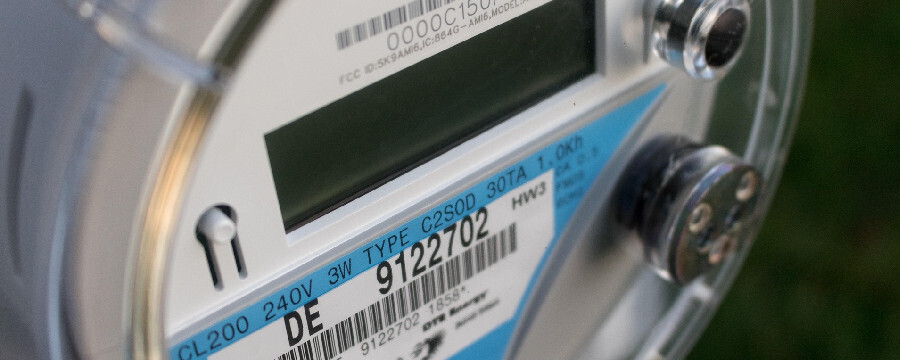
How net metering works:
- Generate electricity with a solar power system
- Feed that electricity into the utility grid, earning a credit for the power you generate
- Spend that credit to power your household appliances, any time you want
What is net metering?
A net metering policy is an agreement between the owner of a solar power system and their utility company, which allows the system owner to store energy in the grid and use it to power their appliances later.
When solar panels generate electricity, it needs to be stored somewhere. Traditionally, some people’s minds jump to off-grid systems with huge battery banks that are designed to be completely self-sufficient.
The reality is that most people go solar to save money on electric bills, and battery storage eats into your return on investment. Most homeowners end up entering a net metering agreement with the local utility, buying a grid-tie solar system without a battery bank to maximize their energy savings.
Types of Net Metering Agreements
Net metering contracts can come with different billing structures that have a dramatic impact on your return on investment. Here are a few of the most common types.
Standard net metering
Under a standard plan, utilities track your net electricity consumption based on how much power you use and produce:
Net consumption = (Electricity used) - (Electricity generated)
You’re billed at equal rates for the power you produce and consume, which means any electricity generated by your solar panels can be pulled from the grid at a 1-to-1 rate. This is the most common approach to net metering.
A simple metaphor is that the utility is like a bank, but for electricity:
- Your solar panels generate electricity, which you deposit into the grid.
- At any time, you can withdraw that electricity to power your appliances.
- Your utility tracks your account balance. If it reaches zero, you pay the normal rate for electricity out of pocket.
Under this arrangement, solar power systems generate a ton of excess energy during the summer, when the sun is shining for long hours. In the winter, homeowners draw on their credits with the utility to cover the periods of low production. A properly sized solar system should generate enough credits in the summer to cover your winter usage - without needlessly oversizing the array and wasting production.
Aggregate Net Metering
Exactly like standard net metering, but with multiple meters on your property monitoring separate structures, like a barn, workshop, or guest residence detached from the main property.
The meters aggregate total usage before reporting to the utility, where it is then billed identically to a standard net metering plan.
Feed-in Tariff
A feed-in tariff is a type of net metering agreement that advantages the solar homeowner. Under FITs, the system owner is charged a lower rate for power drawn from the grid, while being compensated at a higher rate for power they produce. The end result is that homeowners sell electricity to the grid at a profit.
FITs are rare. They are sometimes adopted by local governments to encourage aggressive adoption of solar, as solar can actually smooth the demand curve of grid power, improving efficiency.
However, most established utilities in larger markets do not offer this type of credit.
Net Billing
The opposite of feed-in tariffs. You are compensated at a lower rate for power, but billed a higher rate to draw electricity from the grid. Under net billing agreements, solar power systems can discount your electric bill, but they don’t eliminate them completely.
Community Solar
Community solar describes an initiative where several homeowners or businesses come together to invest in a central solar system that serves the entire community. Under the plan, multiple properties can connect to a community solar farm, and each is billed in proportion to their investment into the system.
The dynamics of billing community solar are largely the same as other net metering agreements. They often bill the same rate for electricity creation and consumption (but not always).
Common Terms & Restrictions in Net Metering Agreements
A net metering agreement is a contract that outlines specific terms for the sale, storage, and repurchase of electricity through the utility. It’s important to examine the contract carefully to understand the terms you’re getting.
Most utilities offer to buy and sell electricity at the same rate, but others pay a discounted rate for contributions to the grid, which can dramatically alter the math for energy savings. Be sure to call or visit your local utility’s website to get a copy of the contract and read it carefully.
Here are some specific terms to keep an eye out for.
Time-of-Use rates
Time-of-use rates, or TOU rates, are variable billing rates that change based on the time of day, as well as seasonal cycles.
In the same way that rideshare services like Uber use surge pricing to charge more during busy periods, your utility may use surge pricing to increase rates during periods of heavy demand on the grid. This occurs on a daily basis (when households come home from work and school), as well as seasonally, when homes are blasting A/C or heating just to survive.
It’s worth pointing out that TOU rates will be in effect whether you go solar or not. If your utility enforces TOU rates, one way to save money is to shift usage of things like the dishwasher or laundry to off-peak hours.
Credit rollover
We’ve never come across an agreement that didn’t offer credit rollover, which allows you to accumulate credits from month to month until you need them. Grid-tie solar just wouldn’t work the same without it. Accumulating credits during summer to spend them during winter is what makes the entire system tick.
Keep an eye out for restrictions on rollover plans. We have seen rare occasions of credits expiring after a certain timeframe - for example, 12 months.
Sizing Limitations
Many utilities specify the maximum system size which can benefit from net metering terms. A common benchmark is 125% of energy usage. These terms are in place to scale demand generation and prevent people from building an oversized PV array just to profit from resale to the utility. Systems above this cutoff would fall under the distinction of community solar or utility-scale solar.
Variable rates
Every utility sets their own rates, and some set different rates for contribution (power into the grid) vs. consumption (power drawn from the grid). Whenever we run the numbers on the ROI of solar, we make the implicit assumption that the utility is buying and selling at the same rate.
This is true for approximately 95% of people, but for the other 5% exposed to a utility that plays by different rules, the payback math will change dramatically. We urge people to take a look at their utility’s net metering agreement when evaluating whether the investment into solar is a worthy one.
Credit Re-Allocation
Certain utilities offer a program to donate any excess production to another account.
Solar systems are designed to offset your yearly energy usage, with a bit of overhead built in as a cushion. Oftentimes, solar homeowners accumulate more credits than they need, and they look for a productive way to use those excess credits.
With participating utilities, these credits can either be donated to your charity of choice, or passed forward to friends, family members, or strangers to provide some relief for their electric bills. The process is pretty simple: fill out a form, designate the recipient account and the amount of credits to be transferred, and the utility will apply those excess credits to their account.
If used for charity purposes, this contribution is tax-deductible.
Custom Solar Kits, Built to Spec
SolarTown sells grid-tied solar kits directly to consumers, bypassing the need to source equipment from All-In-One installers. Whether you’re pursuing a DIY install, or simply want more control over component selection and the ability to shop competing bids from local installers, our complete solar kits will help you save money on your solar project.
We’re also happy to customize our kits to your project specifications. If your net metering agreement calls for higher time-of-use rates, or rewards you with a feed-in tariff for excess production, we’ll take that into account and adjust the parts list accordingly. Our goal is to offset your target energy goals for the year, without sinking your budget into an oversized array.
Free Download: DIY Solar Planning Toolkit
DIY solar has a lot of moving parts: complex permitting applications, unexpected roadblocks, and complex ROI calculations that account for hidden costs and changing utility rate structures. We've compiled everything into one workbook so you can track it all in one place.