
Grid-Tie vs. Off-Grid Solar: Which is Right for Your Project?
Grid-Tie vs. Off-Grid Solar: Which is Right for Your Project?
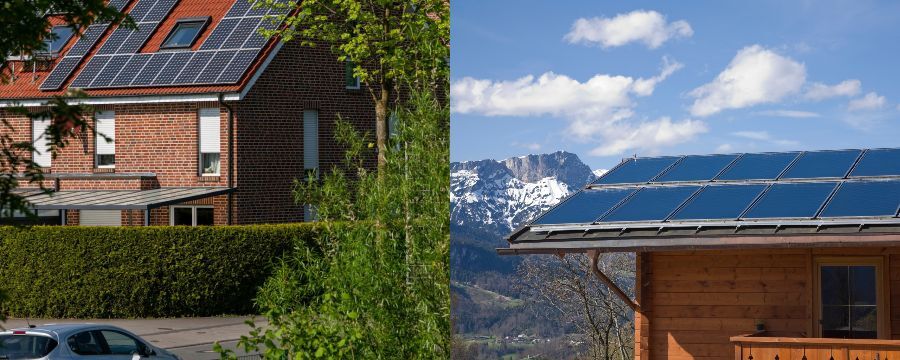
As you start to think about going solar, it’s important to understand how solar electric systems work in relation to the utility grid. The type of system you need completely depends on your motivations for going solar. Here’s a simple overview:
Do you have a connection to the utility grid? Do you want to save money on electric bills? You want a grid-tied system.
Are you trying to bring power to a remote location where power lines aren’t available? You want an off-grid system.
Do you have access to the grid, but need backup power in case of outages? That’s a hybrid system.
The great majority of homeowners go solar to save on monthly electric bills, which means more than 90% of our systems are grid-tied.
Here’s a quick comparison between the three types of solar energy systems on the market.
Grid-Tied Solar
Grid-tied solar is the default choice for most homeowners. Solar panels generate electricity which is fed into the utility grid under a net metering agreement. The utility tracks how much electricity is produced and stores it in the grid, so that the system owner can pull power whenever it’s needed.
It’s very similar to the way a bank account works:
- Solar panels deposit electricity into the grid.
- The utility acts as the bank, storing the electricity.
- Customers withdraw against their balance to power their appliances.
The core advantage of grid-tie solar is that customers do not need to invest in a battery bank. Batteries are expensive, and skipping their inclusion in your system maximizes your energy savings. If your primary goal is to save money on electricity, this is the most economical choice possible.
- Explore grid-tied solar kits
Hybrid Solar
Because grid-tied kits depend on the utility grid to operate, the downside is that they’re still vulnerable to power outages. When the grid goes down, so does your access to electricity.
Grid-connected homeowners may be interested in the financial benefits of going solar, but want to add backup power as an extra layer of protection against outages. Hybrid solar kits are designed with this goal in mind.
Hybrid kits are sized primarily to take advantage of grid interconnection and reduce energy bills, but they also include a small battery bank that kicks on in case of grid failure. The addition of batteries reduces the overall energy savings from going solar, but adds extra peace of mind in areas with harsh climates or unreliable grid power.
Off-Grid Solar
Off-grid solar serves a completely different purpose. It’s a method of generating and storing power where the utility grid is not accessible.
Due to the lack of grid power, a battery bank becomes a mandatory inclusion for off-grid systems to store electricity that is generated locally on-site. Off-grid solar systems are designed to be fully self-sufficient, providing a certain number of days of autonomy - the amount of time the property owner can run appliances from their battery bank before needing to recharge from their solar panels.
Off-grid solar system design is more complex, because off-grid properties need to be concerned about storing enough power to weather long storms or cloudy periods without solar exposure. Most off-grid systems include a generator or other method of backup power for times where the solar panels aren’t producing as much.
- Explore off-grid solar kits
Free Download: DIY Solar Planning Toolkit
DIY solar has a lot of moving parts: complex permitting applications, unexpected roadblocks, and complex ROI calculations that account for hidden costs and changing utility rate structures. We've compiled everything into one workbook so you can track it all in one place.